
Committed to the bit
On costs of running a retail investment portfolio

I’ve sat down and calculated the exact cost of running a portfolio for retail investor in 2026. The total expenses are crazy, especially compared to running a passive portfolio. But I am committed to this experiment and don’t see a way back.
I guess it will be useful to compare expenditures to other investors, so feel free to jump into the comment section. But first, a little intro.
A passive investing disclaimer
Overwhelming part of my investments are currently passive. I’ve been running a passive portfolio for over 10 years, and so far it compounded at 7% a year. Which is a decent result. In line with my expectations.
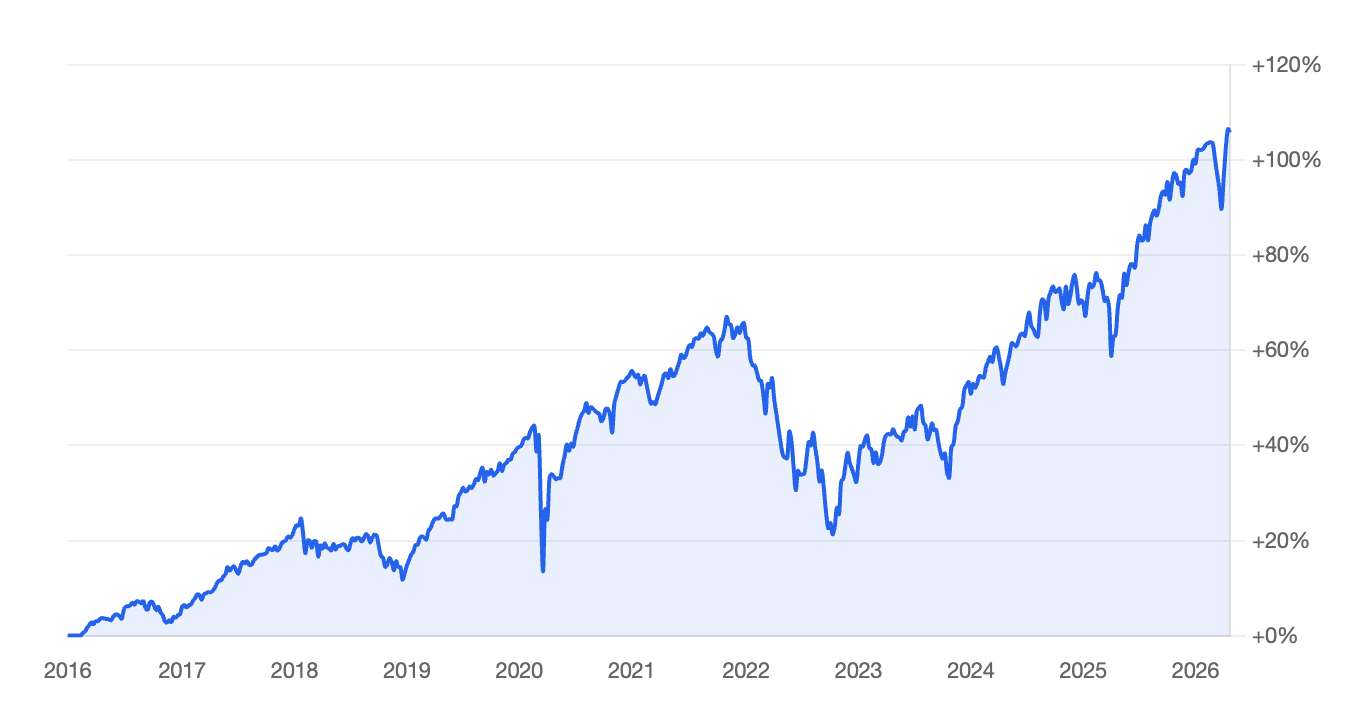
The passive portfolio is 4-5 ETFs (depending on the period) - IVV, IEFA, VGLT, VCLT, PCY. As you can imagine - holding this costs close to zero. Establishing this portfolio on 2015 cost me a couple of books and articles read.
Yet I could not sit still.
In 2014 before I’ve started my investment journey I’ve read the normal stuff you read before you start investing. I’ve been lucky to start with value investing stuff like Graham, Buffet with a bit of Lynch. I could have gone trading route, but God and broker commissions saved me from that choice.
Long story short - that value investing thing did not stick. I’ve figured it took too much time, which was a precious resource for a new father and a devoted oil and gas warrior. So I quickly went full passive.
Value-investing side-quest
Now, with a bit of extra cash laying around I chose to come back to my roots. I’ve set aside $55 000 and started writing online about my side-quest to invest with a value-oriented stock-picking approach.
If you’ve been following me - it’s not been smooth.
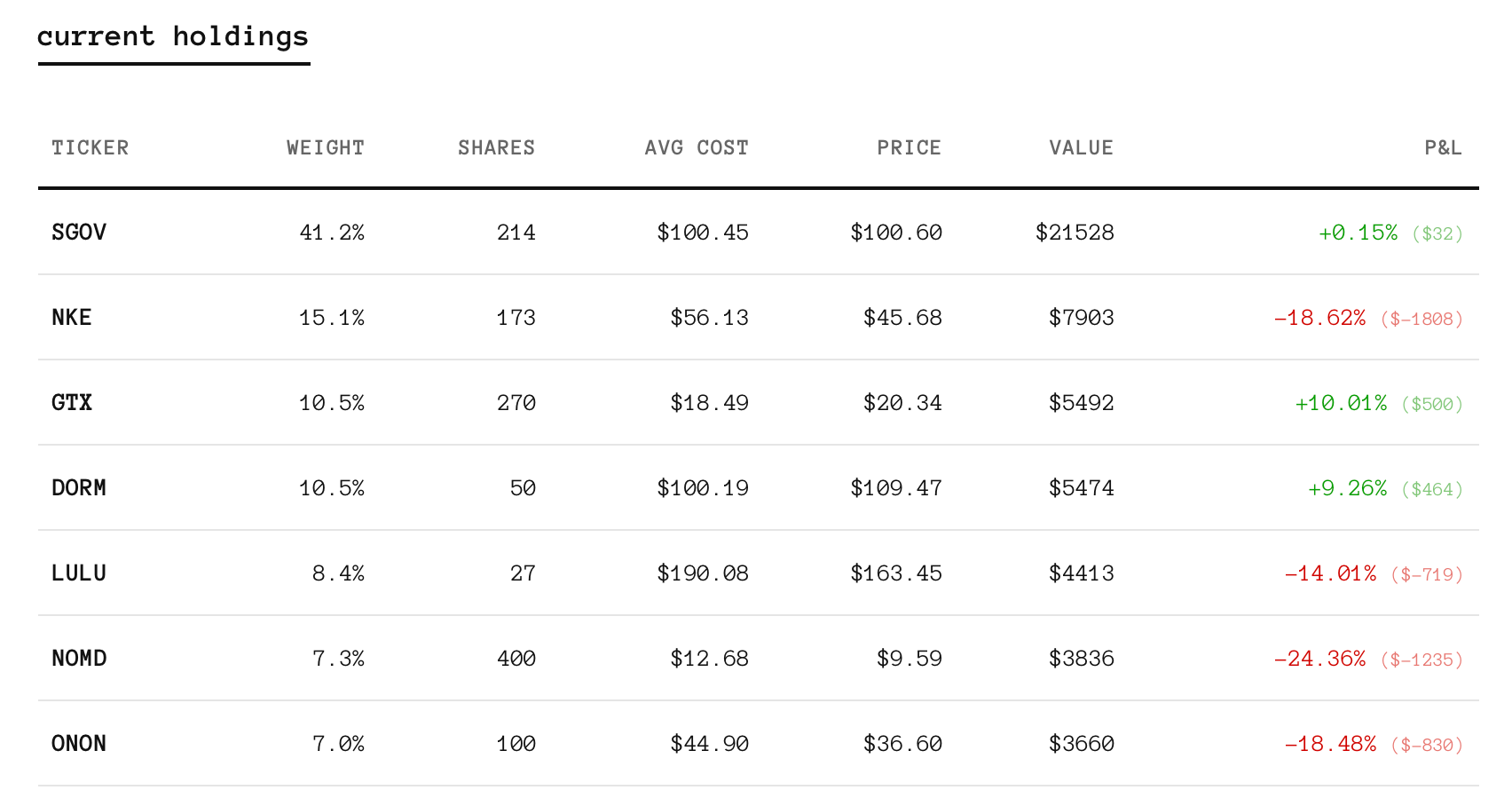
My portfolio is bleeding red and even with S&P at ATH it’s not getting any better.
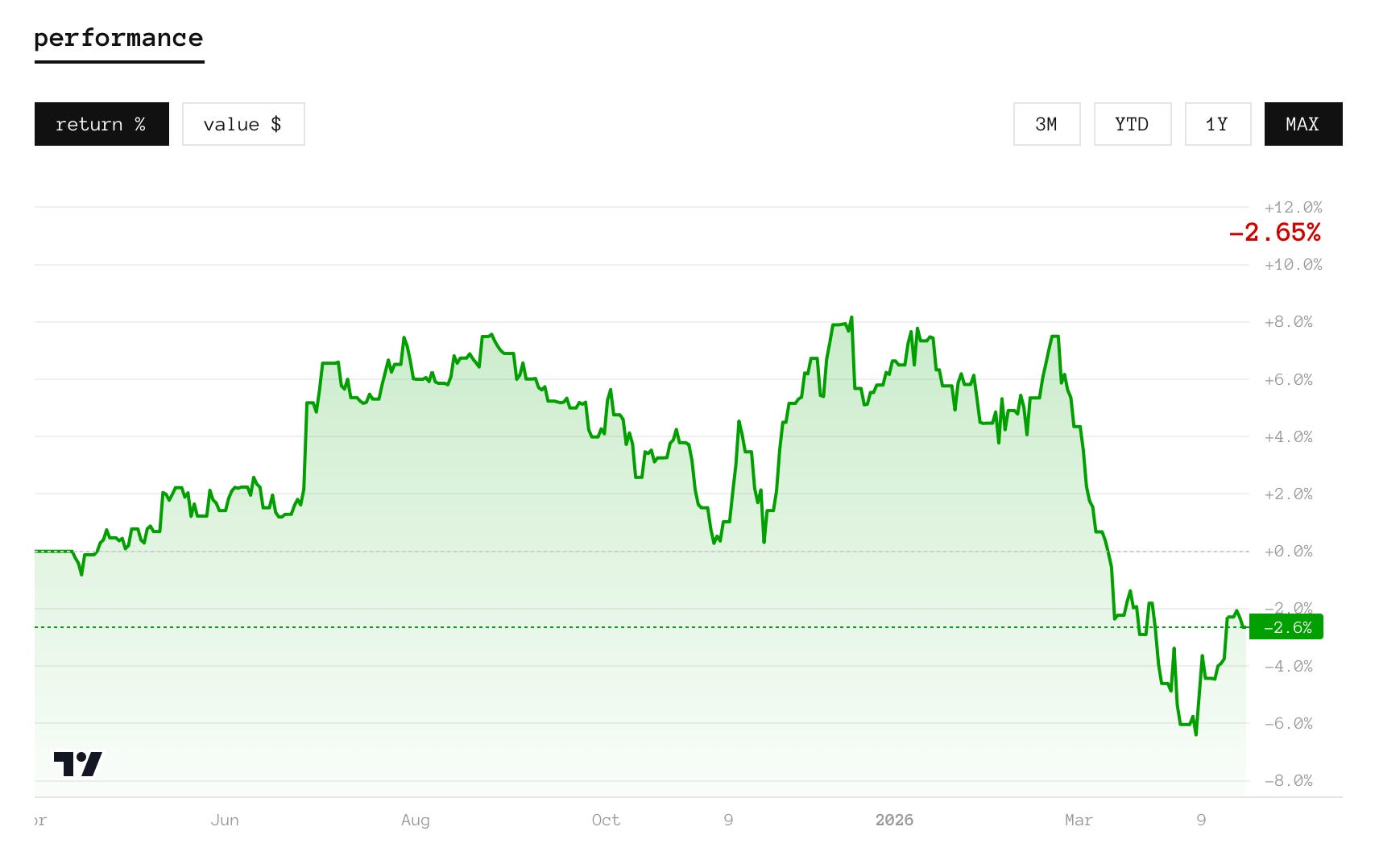
Seeing my passive portfolio up in 2026 and comparing it to 8% draw down in open active portfolio made me ask myself a question. Why am I doing this?
I am spending a lot of time looking for opportunities, researching them, doing DCFs, custom data analysis tooling. Thats quiet a significant portion of my free time.
And while on this thought I’ve also started adding up my expenses to run this thing. And they go way beyond broker’s fees.
Here is the breakdown of my costs.
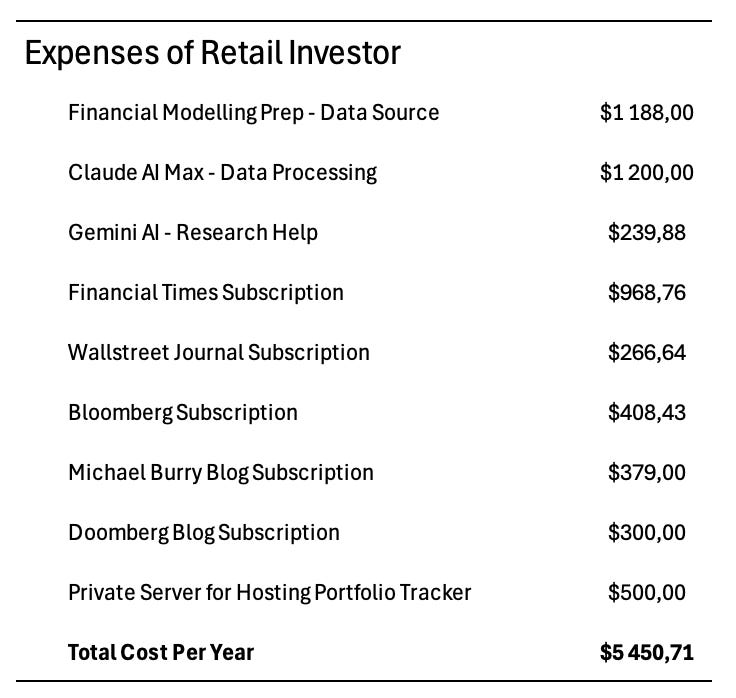
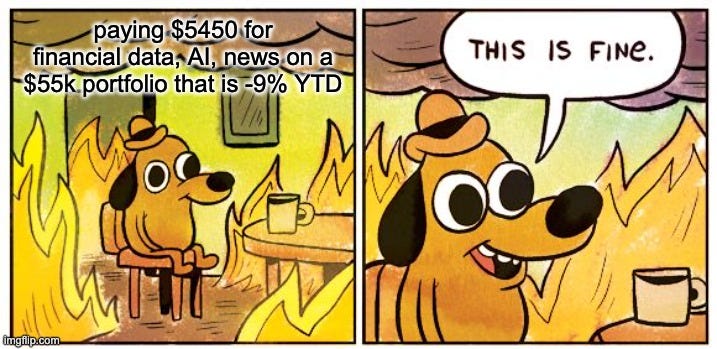
The total runs at $5 450 per year.
On a portfolio that is $55 000.
What have I done?
Components
And I can’t really exclude much from this table. Here is my rationale for each.
Financial Modelling Prep
I found FMP to be the best and fastest source of data for my use case. I use Ultimate tier, which is $99 per month if you pay for the whole year. It has 30 years of financial statement data, prices, earnings calls, insider actions, analyst consensus.
Everything feeds into my analysis. An overkill? Not exactly.
You need at least 10-15 years of historical data to judge the business quality through stuff like ROIIC.
Earnings calls are essential to get management sentiment. You don’t just need a single company’s earnings calls - you should look into the whole sector and cross-check how they view their business and if management you target company is delusional.
Insider actions and analyst consensus is critical to judge how market views the current state of things. If you are bullish on the stock and everyone else is selling - you should be at least cautious in your conclusions. Markets can stay irrational longer than you can stay invested.
So FMP is a bedrock that everything else is built on.
Claude AI
I use a second to highest tier of Claude Max. I don’t have a degree in CS but a relatively robust understanding of LLMs and their limitations.
The primary use is - coding all the tooling that I need for models, screeners etc., since I don’t trust LLM math.
Claude also helps with reading. LLM is ok with 10Ks and earning calls. And since I don’t have a whole day to pour through them - I use it as a shortcut and self-imposed limitation for my experiment.
The logic being - if I can’t do a research with LLM, then there is no chance for retail investor to actually make money reading other analysts digests.
The Max tier also is mandatory since I do work in short bursts. Other tiers are quickly maxed-out and no progress been made.
Gemini AI
Acts as my main research helper for specific questions through Deep Research tool.
I found that it is more robust and gives better numbers and links if you aim it at a problem. Claude is prone to hallucinations and short-cuts if you give him an open-ended task with web-search.
I also enjoy Gemini as a companion to watching series like Game of Thrones for asking lore questions and getting explanations. So cost justified in my opinion :)
Financial Times, WSJ, Bloomberg
Arguably something I can actually think of cutting.
With so much writing here on substack, I have a hard time keeping up with all three.
But there is one huge drawback to substack that I can’t deal with right now. It’s algorithmic feed. I have to sift through “this AI prompt will make your stock research for you” and “how I’ve predicted next 100 bagger” before I get to actually relevant pieces.
With news outlets it’s much easier right now. They are not polluted with self-promotion and click-bait. Only reporting on subjects that currently matter. And the reporting quality itself is very good.
So may be one of them should go. But that is a hard pill to swallow.
Michael Burry
One of the few blogs that I am actually paying for to read. His move to substack coincided with me starting my stock-picking journey and I enjoy reading and learning from him.
I believe this to be one of the most high-value sources for both education and stock-picks. People say he predicted the last 8 market crashes that never happened. But at least he is the one with skin in the game and suffers from his public convictions for everyone to see with the rest of us. Nothing but respect and a huge shout out.

Doomberg
A bit of an off beat blog for stock market dwellers. But as an oil and gas professional and an energy nerd I find it most entertaining.
The analysis is spot-on and predictions are also public and clear.
I’ve been working to add oil and gas to my portfolio, but probably being an insider and knowing all the risks I have been too hesitant to act. Now all opportunities have been priced-out for me. So until next time.
Still a worthwhile read in my opinion.

Private Server Hosting
This is a part of my experiment. My aim is to have my portfolio live with every step logged for public. That means my portfolio will have to live somewhere online.
There are cheaper alternatives. But given that I am not a professional coder I have to choose options that are user-friendly.
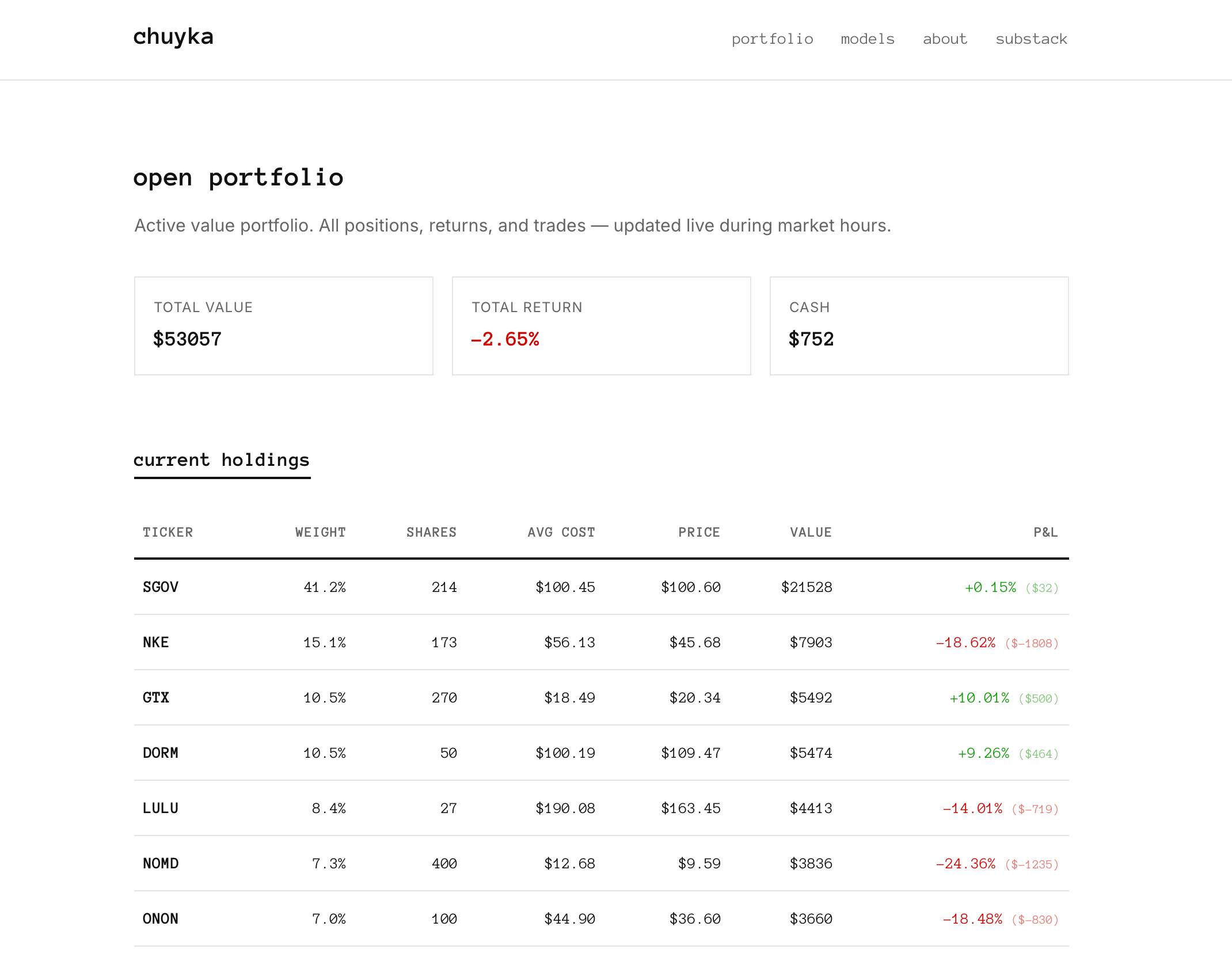
The page is still in development and most of the screenshots you see on this substack are from there. I am aiming to bring it live sooner rather than later so stay subscribed :)
Value vs Cost
So the question remains.
Is $5 450 per year justified on a $55 000 portfolio?
Probably not.
Probably there are cheaper ways to do the exact same thing with a -2,65% from inception result.
But here at Chuyka my aim is to provide real open view into the dealings of a random retail investor that is trying to beat his own long-term passive result.
All passive-investing community is preaching - is that it is impossible.
I think it is possible. It just takes a lot of grit and perseverance to achieve this. And I am here to f-around and to find out myself.
Feel free to jump into the comments section and share how your expenses look. I bet there are different approaches to data acquisition and analysis. Will be glad to learn.
Trust your chuyka. Don’t let FOMO eat you alive.
Not an investment advice. Think for yourself. Don’t trust online experts.